

Clinical chemistry
Dry chemistry analysers for clinics and fully automated analysers for laboratories, with their slides, reagents and controls.
Throughput
Fujifilm's DRI-CHEM dry chemistry analysers need no water connection and no calibration except for CRP. Randox's fully automated RX series measures 270–800 photometric tests per hour, or up to 1.200 including ISE.
In Finland we supply Fujifilm DRI-CHEM analysers with their slides, and Randox RX analysers, reagents and Acusera controls. We install the instruments and train the users.
Randox
- RX daytona+50 sample positionsCapacity 450 tests/h, of which 270 colorimetric or photometric tests
- RX imola72 sample positionsCapacity 560 tests/h, of which 400 colorimetric or photometric tests
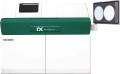
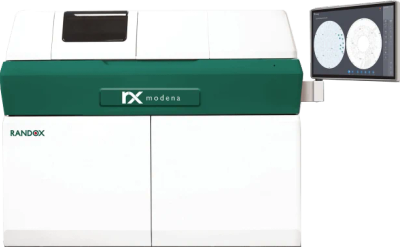
- RX modena94 sample positions, continuous loadingCapacity 1,200 tests/h, of which 800 colorimetric or photometric tests
Applications
Clinics and health centres
15 tests in about 9 minutes
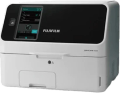
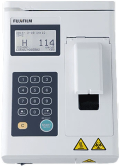
The NX600 measures one sample at a time. It works without a water connection and needs no calibration except for CRP. The plasma filter separates plasma from whole blood in a minute.
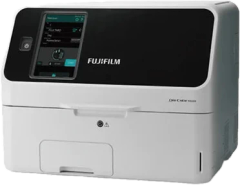
Urgent samples
Ammonia in about 2 minutes
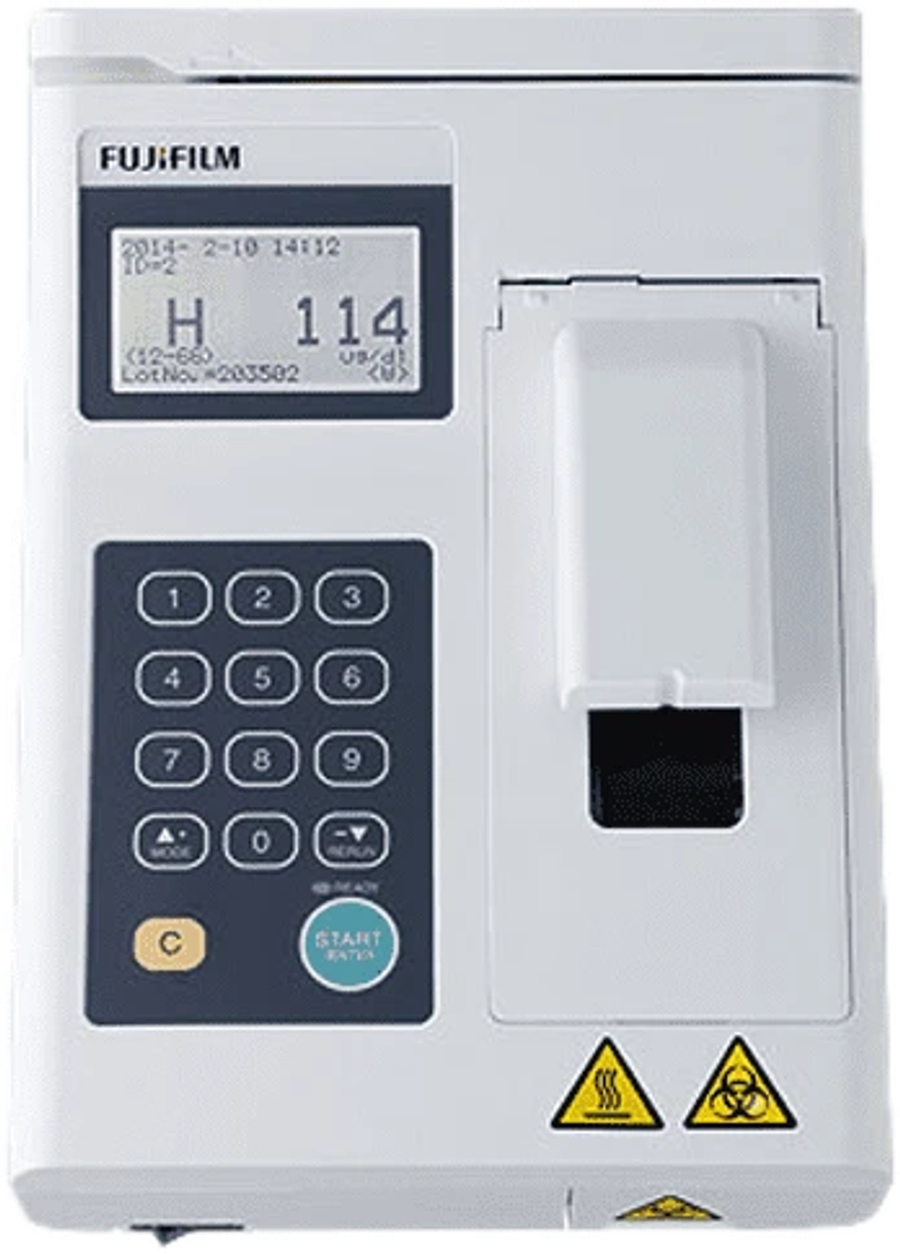
The NX10N measures blood ammonia from whole blood. On the NX700, an urgent sample can be run mid-run with the STAT button, and the RX daytona+ and RX imola have a dedicated loading port for urgent samples.
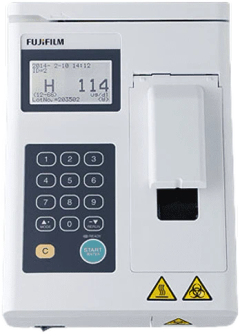 DRI-CHEM NX10NAmmonia analyser for urgent situations: weighs 1.2 kg, result from whole blood in about two minutes.
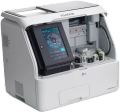
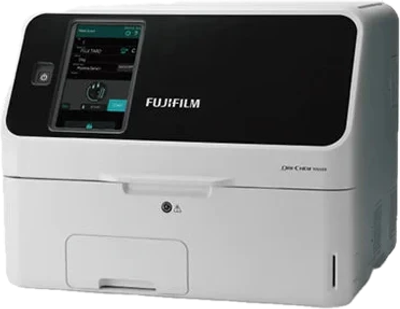
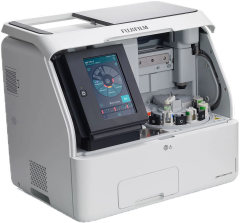 DRI-CHEM NX700Walk-away analyser for five samples at a time: 28 colorimetric tests and electrolytes, up to 190 tests per hour.
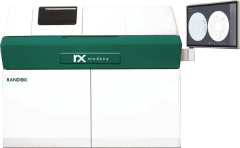 RX analysersFully automated clinical chemistry analysers in three sizes. 270–800 photometric tests per hour, up to 1.200 including ISE.
Laboratories
190–1.200 tests per hour
The NX700 takes five samples at a time. Randox RX analysers have clot detection and their own quality control module, and samples can be added to the RX modena during a run.
Slides, reagents and controls
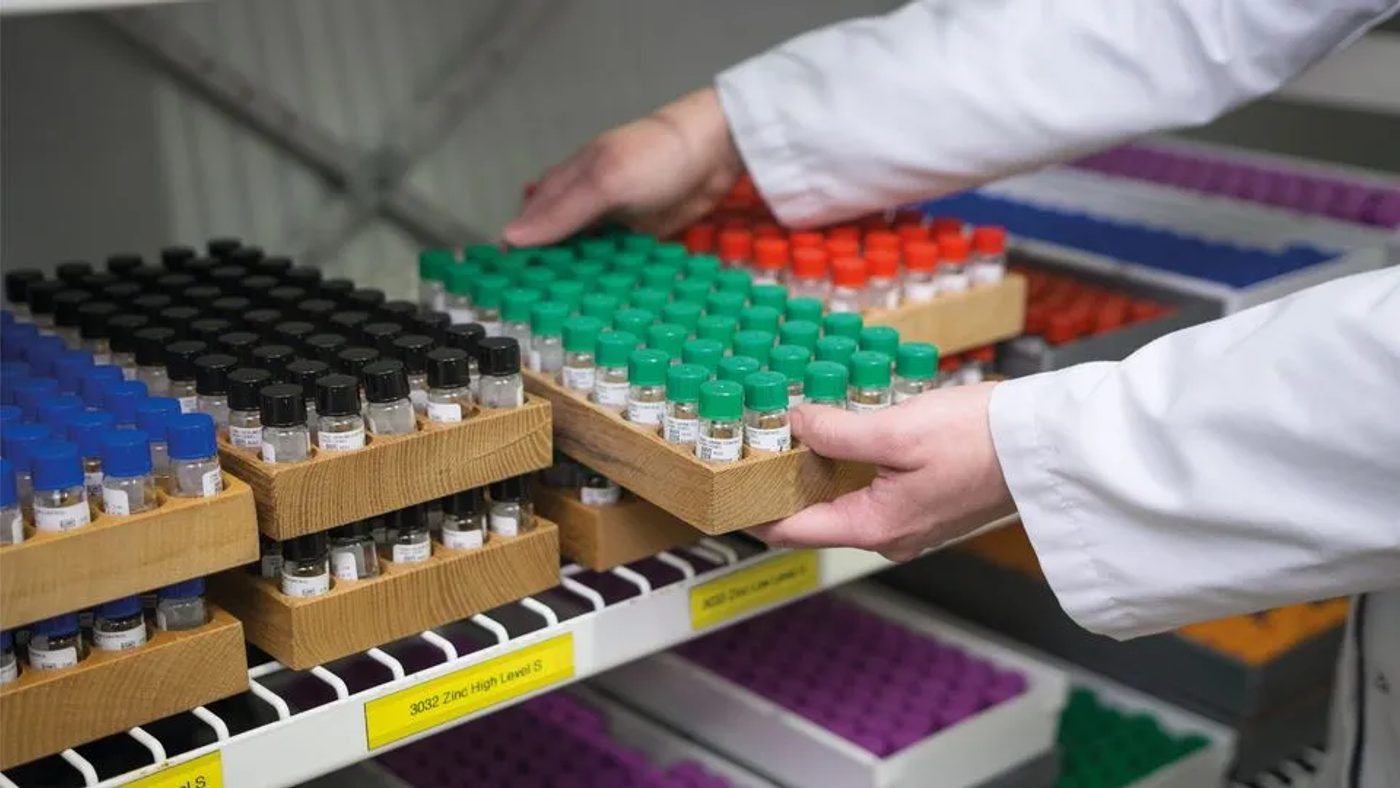
DRI-CHEM slides for NX analysers, Randox speciality reagents such as Lp(a), NEFA and D-3-hydroxybutyrate, and Acusera controls for quality control.
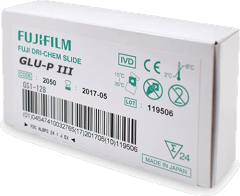 DRI-CHEM slidesDry slides for NX analysers: ALP, amylase, creatinine, glucose, ALT and Na-K-Cl. Other slides on request.
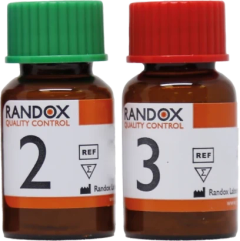 Acusera Human Assayed Multi-SeraComprehensive chemistry control: 67 analytes in a single vial, levels 2 and 3.
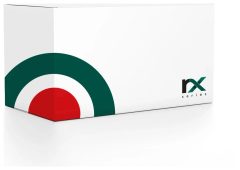 Lipoprotein (a) assayReady-to-use liquid Lp(a) reagent, calibrated in nmol/l and traceable to the WHO/IFCC reference material.
- NEFA assay (free fatty acids)Reagent for the measurement of free fatty acids (NEFA), measuring range 0.072–2.24 mmol/l.
- D-3-hydroxybutyrate (Ranbut)Ketone body assay: D-3-hydroxybutyrate accounts for about 75% of ketone bodies. Calibrator in the kit.
Choosing a chemistry analyser
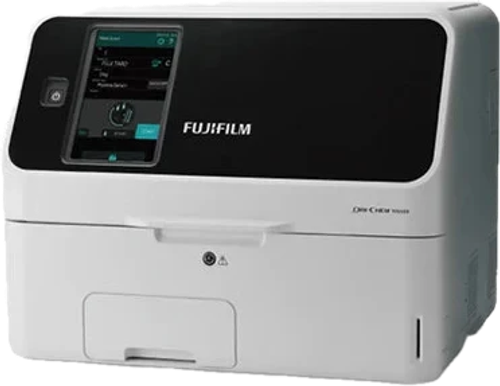
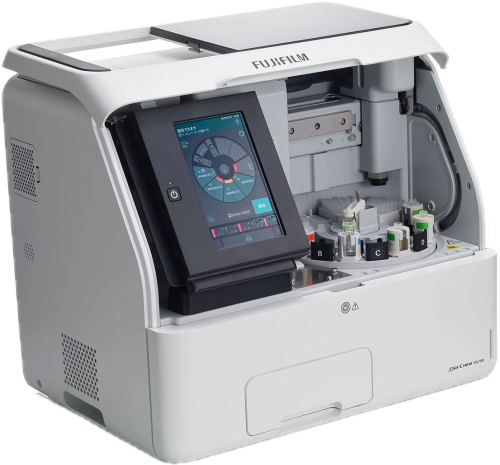
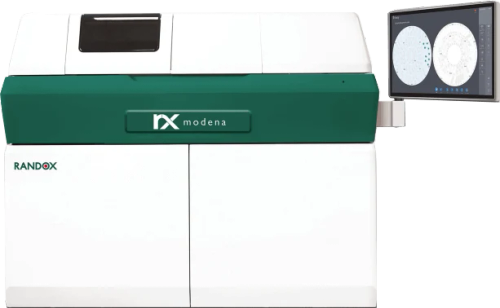
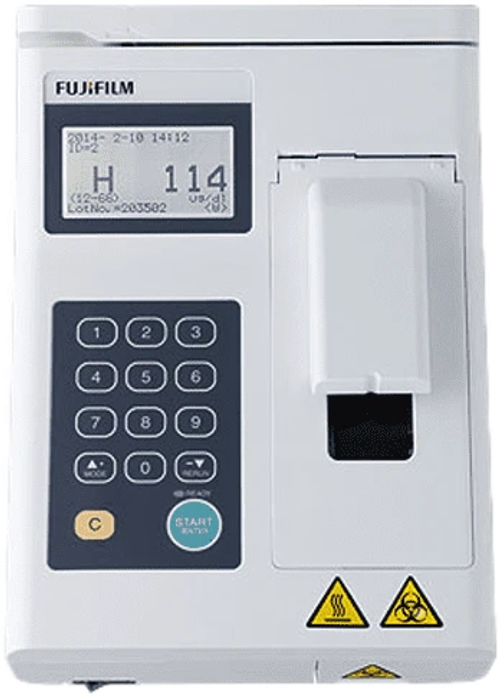
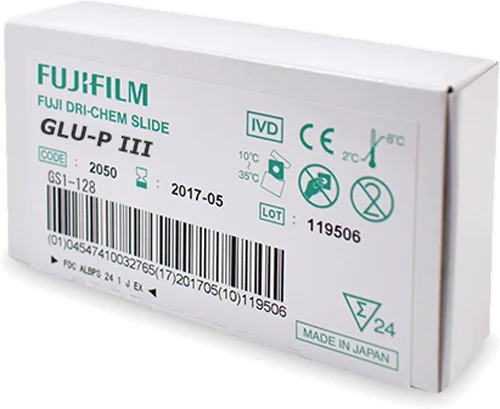
The NX600 measures one sample at a time, and the NX700 takes five samples. RX analysers have 50–94 sample positions, and samples can be added to the RX modena during a run.
DRI-CHEM analysers run on ordinary mains power without water, air supply or exhaust. RX analysers need purified water: the daytona+ up to 5, the imola 18 and the modena less than 20 litres per hour.
The NX10N measures blood ammonia from a 10 µl whole blood sample in about two minutes. On the NX700, an urgent sample can be run with the STAT function. The RX daytona+ and RX imola have a dedicated loading port for urgent samples, and on the RX modena urgent samples are processed ahead of the others during the run.
DRI-CHEM measures 28 colorimetric tests, such as liver and kidney function tests, glucose, lipids and CRP, plus sodium, potassium and chloride. The RX series menu also includes specific proteins, direct HbA1c and speciality tests such as Lp(a), cystatin C, NEFA and D-3-hydroxybutyrate.
The NX600 (approx. 28 kg) and NX700 (approx. 33 kg) are benchtop instruments, as are the RX daytona+ (120 kg) and RX imola (150 kg). The RX modena is a floor-standing model.
Dry chemistry and wet chemistry
| Dry chemistry: Fujifilm DRI-CHEM | Wet chemistry: Randox RX | |
|---|---|---|
| Reagent | Dry on a slide, one slide per test | Liquid, 50–100 refrigerated reagent positions |
| Calibration | Not required except for CRP. Lot differences are corrected with the QC card in the pack. | On the analyser, 6–7 calibration models; the imola and modena calibrate automatically |
| Water | No water, air supply or exhaust | Purified water 5–20 l/h depending on the model |
| Throughput | 128–190 tests per hour | 450–1.200 tests per hour including ISE |
| Samples per run | 1 (NX600) or 5 (NX700) | 50–94 sample positions |
| Sample volume | 10 µl per test, CRP 5 µl, electrolytes 50 µl | 0.5–35 µl depending on the model |
| Tests | 28 colorimetric tests plus Na, K and Cl | Routine chemistry, specific proteins, lipids, diabetes and speciality tests |
| Size | Benchtop, 28–33 kg | Benchtop (120–150 kg) or floor-standing |
Dry chemistry: Fujifilm DRI-CHEM
- Reagent
- Dry on a slide, one slide per test
- Calibration
- Not required except for CRP. Lot differences are corrected with the QC card in the pack.
- Water
- No water, air supply or exhaust
- Throughput
- 128–190 tests per hour
- Samples per run
- 1 (NX600) or 5 (NX700)
- Sample volume
- 10 µl per test, CRP 5 µl, electrolytes 50 µl
- Tests
- 28 colorimetric tests plus Na, K and Cl
- Size
- Benchtop, 28–33 kg
Wet chemistry: Randox RX
- Reagent
- Liquid, 50–100 refrigerated reagent positions
- Calibration
- On the analyser, 6–7 calibration models; the imola and modena calibrate automatically
- Water
- Purified water 5–20 l/h depending on the model
- Throughput
- 450–1.200 tests per hour including ISE
- Samples per run
- 50–94 sample positions
- Sample volume
- 0.5–35 µl depending on the model
- Tests
- Routine chemistry, specific proteins, lipids, diabetes and speciality tests
- Size
- Benchtop (120–150 kg) or floor-standing
DRI-CHEM test menu
The NX600 and NX700 measure 28 colorimetric tests plus electrolytes (sodium, potassium and chloride). Each colorimetric test has its own slide, the electrolytes are measured from one slide, and there are 24 slides per pack. CRP is the only test in the menu that is calibrated.
The analyser also calculates values such as LDL cholesterol, non-HDL cholesterol, globulin and anion gap. According to Fujifilm, not all tests are available in all countries, so we confirm the menu in our quote.
Enzymes 11
- Alanine aminotransferaseALT
- Aspartate aminotransferaseAST
- Alkaline phosphataseALP
- Gamma-GTGGT
- AmylaseAMYL
- LipaseLIP
- Creatine kinaseCPK
- CK-MBCKMB
- Lactate dehydrogenaseLDH
- CholinesteraseCHE
- Leucine aminopeptidaseLAP
General chemistry 15
- GlucoseGLU
- CreatinineCRE
- Urea nitrogenBUN
- Uric acidUA
- Total bilirubinTBIL
- Direct bilirubinDBIL
- Total cholesterolTCHO
- HDL cholesterolHDL-C
- TriglyceridesTG
- CalciumCa
- PhosphateIP
- MagnesiumMg
- AlbuminALB
- Total proteinTP
- AmmoniaNH3
Inflammation 1
- CRPCRP
Electrolytes 3
- SodiumNa
- PotassiumK
- ChlorideCl
How dry chemistry works
A DRI-CHEM slide is a multilayer film that contains, in dry form, all the reagents needed for one measurement. The sample spreads evenly in the spreading layer, reacts in the reagent layer and colours it. The analyser measures the colour intensity from reflected light at 37 °C.
Sodium, potassium and chloride are measured from the same slide with ion-selective film electrodes. The sample and a reference solution of known concentration are dispensed onto the slide at the same time, and all three results are ready in about a minute.
Differences between slide lots are corrected with the QC card in the pack, which the analyser reads. This is why no separate calibration is needed, except for CRP. As there are no cuvettes to wash, the analyser needs no water and no water purifier, and no chemical waste is produced.
Quality assurance in point-of-care testing
Labquality maintains the national point-of-care testing recommendation, which covers test selection and introduction, sampling, interpretation of results and control of sources of error. The wellbeing services counties add practical requirements in their own instructions, for example the guideline of the Wellbeing Services County of Southwest Finland:
- The care unit has a named person responsible for point-of-care testing, who is in charge of quality control, instrument condition and staff induction.
- Only trained staff perform the tests, and the training is documented.
- Result levels are monitored regularly with control solutions, and the results are recorded.
- The unit takes part in external quality assessment regularly.
Internal quality control and independent controls
Randox Acusera controls are independent: they are not manufactured or optimised for any particular reagent, method or analyser. According to Randox, ISO 15189:2022 recommends considering independent controls alongside or instead of the manufacturer's controls. RX analysers plot Levey-Jennings charts and store the control history.
Ammonia as an urgent test
The NX10N measures ammonia from freshly drawn whole blood using a 10 µl sample in about two minutes, and used slides can be disposed of without touching them. The same NH3 slides are also used on the NX600 and NX700.
Glossary
Dry chemistry
A method in which the reagents are dry on a slide. The sample is dispensed directly onto the slide, and no water or liquid reagents are needed.
Wet chemistry
A method in which the sample and liquid reagents are mixed in a cuvette and the result is measured from transmitted light.
Colorimetry
A measurement in which the analyte concentration is determined from the intensity of the colour produced in a reaction.
ISE
Ion-selective electrode. Measures the concentration of sodium, potassium and chloride from an electrical potential difference.
QC card
A card in the DRI-CHEM slide pack that holds the lot correction factors. The analyser reads it, so no separate calibration is needed.
STAT
An urgent sample that is run ahead of the others during a run.
Random access
The analyser can measure different tests from different samples in any order.
Walk-away
Samples are loaded in one go, and the analyser measures them without an operator.
Levey-Jennings chart
A chart for monitoring control results against limits based on the mean and standard deviation.
Westgard rules
A set of rules for deciding, on the basis of control results, whether an analytical run is accepted.
Independent control
Control material that has not been manufactured for a particular reagent or analyser.
Point-of-care testing
A laboratory test performed close to the patient, for example in a clinic or on a ward.
Manufacturers
 Fujifilm: dry chemistry analysersFUJI DRI-CHEM analysers measure clinical chemistry tests from dry slides. No water connection is needed, most tests require no calibration, and results are ready in a few minutes.
 Randox: quality control and clinical chemistryAcusera controls from Randox monitor assay accuracy independently of the analyser. Randox also manufactures the RX series clinical chemistry analysers and speciality reagents.
We install, train and service.
The same specialist handles commissioning and is still there for service years later.
Frequently asked questions
If you cannot find an answer, call +358 10 841 1600 or email asiakaspalvelu@diagnostica.fi.
What is the difference between dry and wet chemistry?
In dry chemistry, the reagent is ready on the slide. Fujifilm DRI-CHEM analysers need no water connection and no calibration except for CRP. Wet chemistry analysers, such as the Randox RX series, use liquid reagents and water (5–20 litres per hour depending on the model), and they have a higher throughput.
Do you install the analyser and train the users?
Yes. We deliver the instruments installed and tested, and we train the users in your own laboratory.
Does a DRI-CHEM analyser need calibration?
No, except for CRP. Differences between slide lots are corrected with the QC card in the pack, which the analyser reads. Electrolytes are neither calibrated nor corrected.
Can a DRI-CHEM analyser measure whole blood?
Ammonia (NH3-WII) and electrolytes can be measured from whole blood. Other tests are measured from plasma or serum. The NX600 plasma filter separates plasma from whole blood in about a minute.
How much sample is needed?
On a DRI-CHEM analyser, a colorimetric test needs 10 µl, CRP 5 µl and the electrolytes 50 µl in total. On RX analysers, the sample volume is 0.5–35 µl depending on the test and model.
Can an RX analyser measure HbA1c?
Yes. All three RX models measure HbA1c directly, and the RX daytona+ does so without sample pre-dilution.
Where do I order slides and reagents?
From us. Add them to your quote request from the product page or call +358 10 841 1600.