INR point-of-care testing with the Coag-Sense PT2
The Coag-Sense PT2 measures prothrombin time directly from a fingertip sample and gives an INR result in less than a minute. Here is what the test involves in everyday clinical practice.
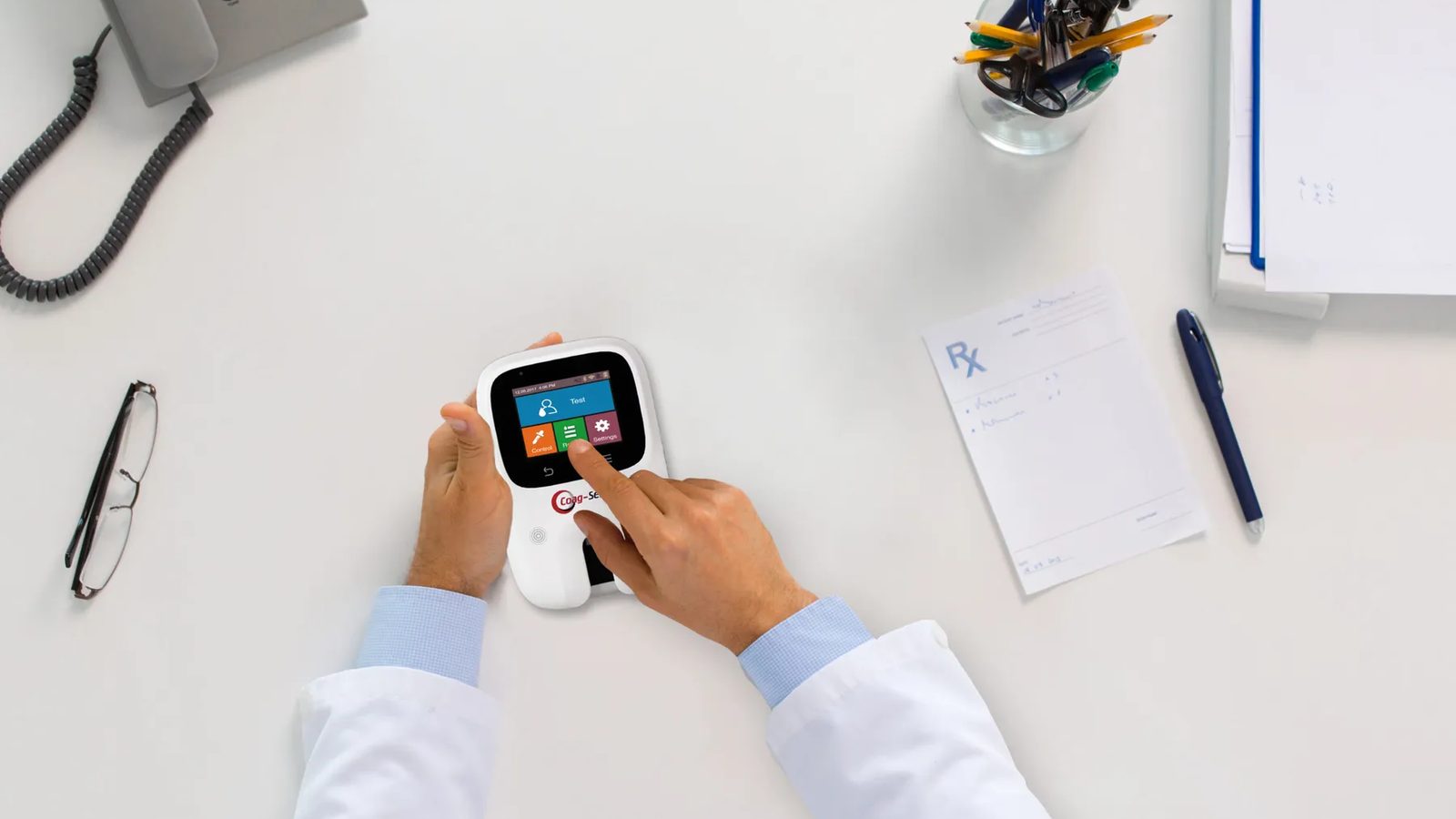
Sample. The test needs 10–12 µl of fresh capillary blood. The finger is lanced with a 21 G safety lancet, and the blood is transferred to the strip with an evacuated transfer tube within 15 seconds of lancing. Thinner diabetes lancets are not used, and venous samples are outside the meter's intended use.
Measurement. The strip warms up for 25 seconds, after which there are two and a half minutes to apply the sample. A small wheel in the strip mixes the sample with dried thromboplastin, and the meter detects the clot when it interrupts a light beam. The result is reported as prothrombin time in seconds and as INR; the measuring range is INR 0.8–8.0 and the haematocrit range 15–60 %.
Quality control. Each strip pack contains a low and a high control strip, and controls are run for each new strip lot. The QC lockout blocks patient testing if a control fails. The strip lot data are read from the NFC tag in the pack, and the meter is not calibrated.
Patients. The meter is intended for monitoring patients on warfarin-type therapy (vitamin K antagonists). It is not used for patients receiving heparin or direct oral anticoagulants (DOACs), and the PT2 self-testing version is not available in Europe.
Results. The meter stores 2.000 patient results, 500 control results and 1.000 user IDs. Results are transferred to middleware using the POCT1-A protocol over USB, Ethernet, Wi-Fi or Bluetooth.
Technical data, strips and accessories: Coag-Sense PT2. If you are interested, send a quote request.